If you are considering a sale of Carrier chillers in Gwinnett County, begin with the equipment you actually have and the conditions at the site. This guide addresses selling Carrier chillers in Gwinnett County: controls and electrical boundaries, including the information a buyer needs, practical removal constraints and the decisions a facility should make before releasing an asset. The business buys equipment only; it does not sell chillers.
Identify the Carrier chillers being offered
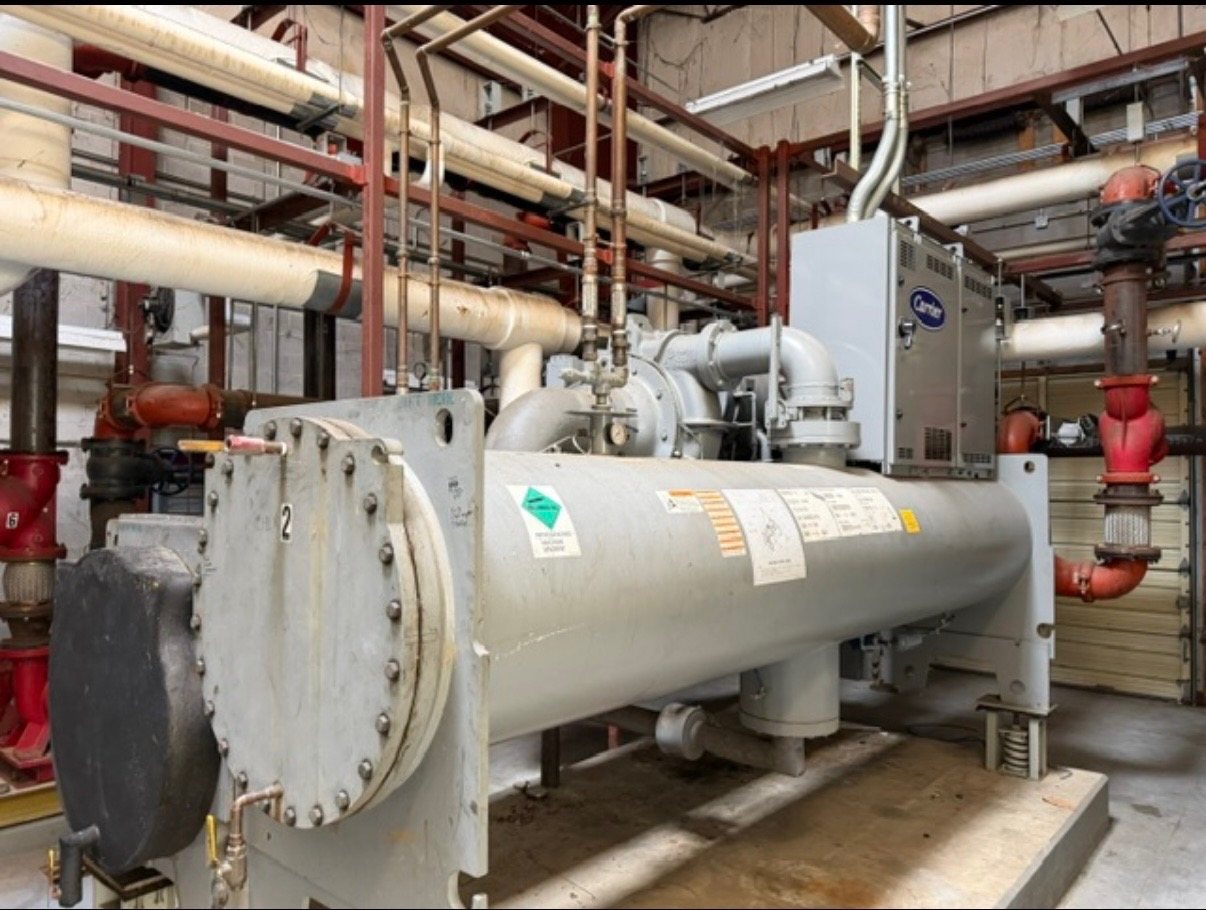
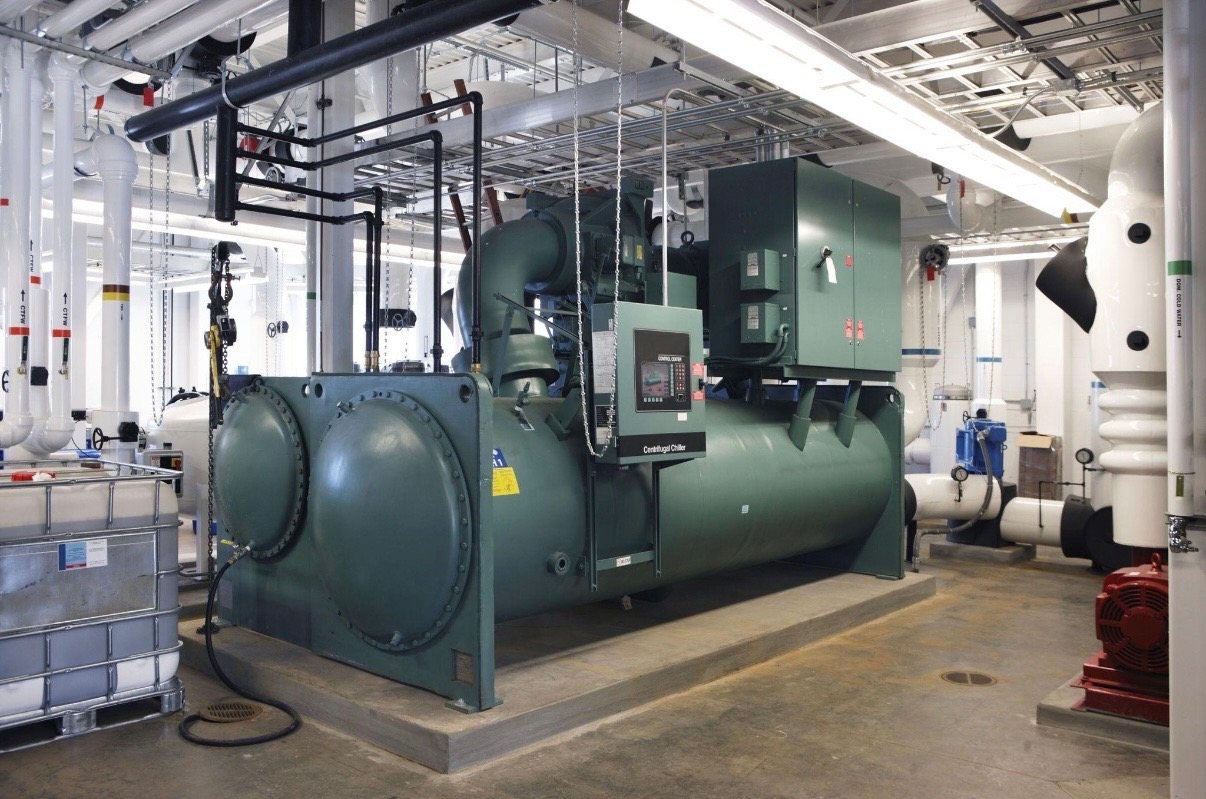
For a Carrier unit, photograph the complete equipment nameplate and any separate compressor or starter labels. The series, full model number, serial number and rated capacity give a buyer a starting point, but the installed machine may have been modified. Include a picture of the whole unit so an enclosure, remote condenser or separate starter is not mistaken for a complete package.
Look for records showing compressor work, control replacements, tube maintenance or a long shutdown. A controller screen can be useful as a photograph, but a seller does not need to power up the chiller or perform a running test. Report disconnected sensors, missing covers and removed components honestly; those details help distinguish an intact machine from an incomplete one.
Plan for controls and electrical boundaries
At a Gwinnett County site, shared controls can complicate the sale of a single surplus machine. Identify whether the chiller has its own controller and starter or shares panels, communication links or building automation with retained equipment. Photographs and existing drawings are more useful than an assumption that every wire belongs to the machine.
Have the facility's responsible personnel identify live services and the boundary of the equipment being sold. The buying service handles agreed disconnects, while the site coordinates its own shutdown authorizations and controls changes for retained systems. Never ask staff to open energized panels or bypass safeguards for photographs.
What affects the cash offer?
Carrier equipment can have different compressor arrangements, heat exchangers and electrical requirements depending on the actual model. Provide the voltage and any available refrigerant information from the plate rather than assuming them from the manufacturer. If a separate drive, starter or condenser is included, identify it explicitly so the offer reflects what is actually being transferred.
In addition to the equipment itself, controls and electrical boundaries can change the labor, equipment and time needed to complete a purchase. A useful comparison is the net amount to the seller together with the full written scope, not an attractive headline price with unexplained exclusions. There is no fixed price per ton in this guide: an offer follows a review of the individual machine and its circumstances.
Information to gather before requesting an offer
Start with clear photographs of the nameplate, the complete equipment and the surrounding access route. For Carrier chillers, add the manufacturer's model and serial number, rated tons, refrigerant, electrical rating and approximate dimensions or shipping weight if documented. Describe the equipment's present location and whether it is installed, isolated or stored. Explain any known damage, missing parts or significant service work without guessing about conditions you cannot see.
A short inventory should also list separate starters, drives, pumps, controls or other accessories and state which ones are included. Send available drawings and service records if you have them, but do not delay an inquiry merely because paperwork is incomplete. Identify the authorized decision-maker, site contact and desired release date. Avoid opening panels, disturbing pressurized components or putting equipment into operation for photographs.
From offer to payment and removal
After reviewing the details, the buyer can discuss a cash offer and the proposed scope for the specific equipment. Payment is upfront, before removal, under the agreed written terms; confirm the amount and payment method before accepting. No chiller testing is required. The offer should identify the assets being purchased and any conditions or access assumptions, so the seller can decide whether the transaction meets the facility's needs.
The buying service handles refrigerant recovery, disconnects, rigging or crane work as needed, loading, freight and hauling within the agreed scope. The site should coordinate access, operating approvals and its own isolation procedures with the responsible personnel. Recovery and other work must be planned for the actual equipment and applicable requirements; refrigerant must not be vented. Keep retained systems and neighboring property clearly outside the purchase unless explicitly included.
Confirm the handoff in writing
Before scheduling collection, review the controls and electrical boundaries considerations alongside the lift route and equipment list. Confirm who authorizes entry, which connections are to be separated, where a truck can stage and what protection the site requires. If access, weight or the scope changes after the initial review, discuss the change before work proceeds. Preserve photographs, the accepted offer and the final equipment inventory in the facility's asset records.
Good preparation does not require a perfect maintenance file or a working machine. It means distinguishing documented facts from unknowns, disclosing constraints early and making sure the seller and buyer understand the same job. Ask for clarification whenever a price, payment timing, recovery step or responsibility for a retained component is unclear.
Questions to ask before you proceed
- Which serial-numbered machines and separate accessories are included in the offer?
- Is payment made upfront before removal, and what payment method will be used?
- Does the agreed scope include refrigerant recovery, disconnects, rigging, loading and hauling?
- What site access, operating approvals and isolation arrangements must the facility provide?
- How will shared equipment, occupied areas and the exit route be protected?
- What happens if the documented dimensions, access or equipment condition change?