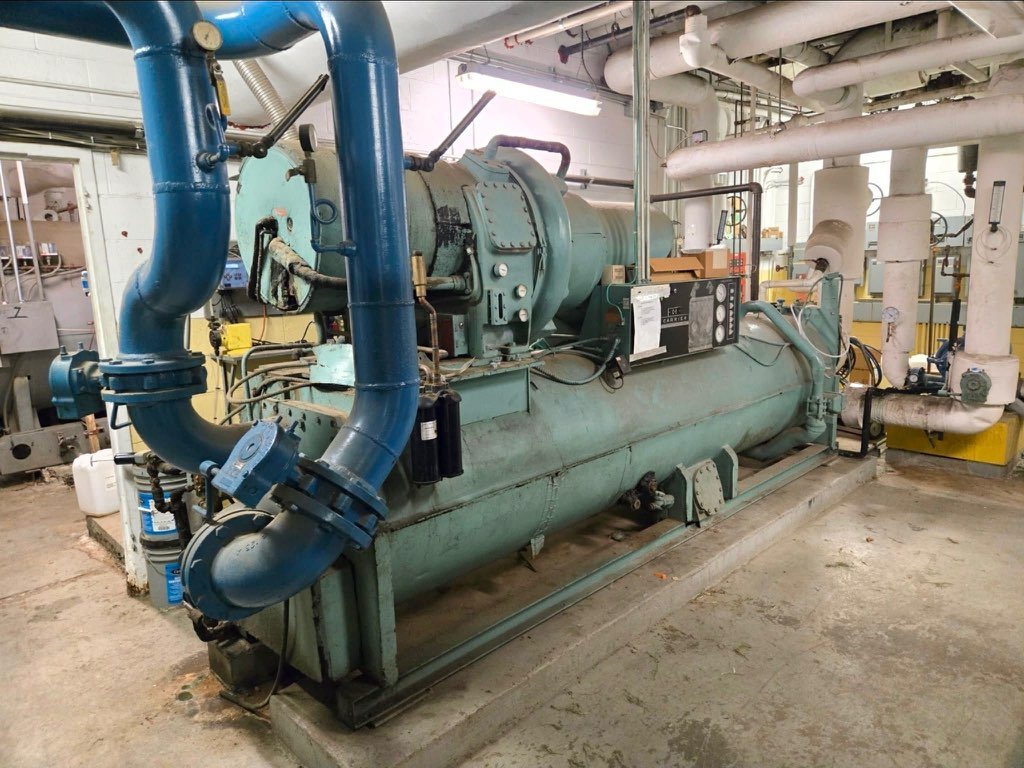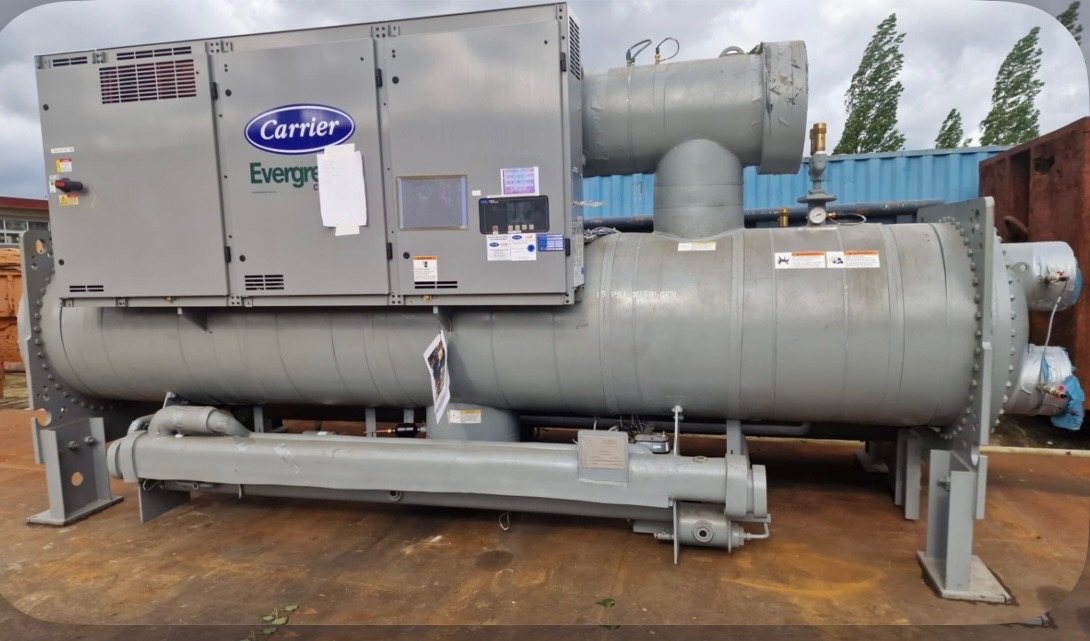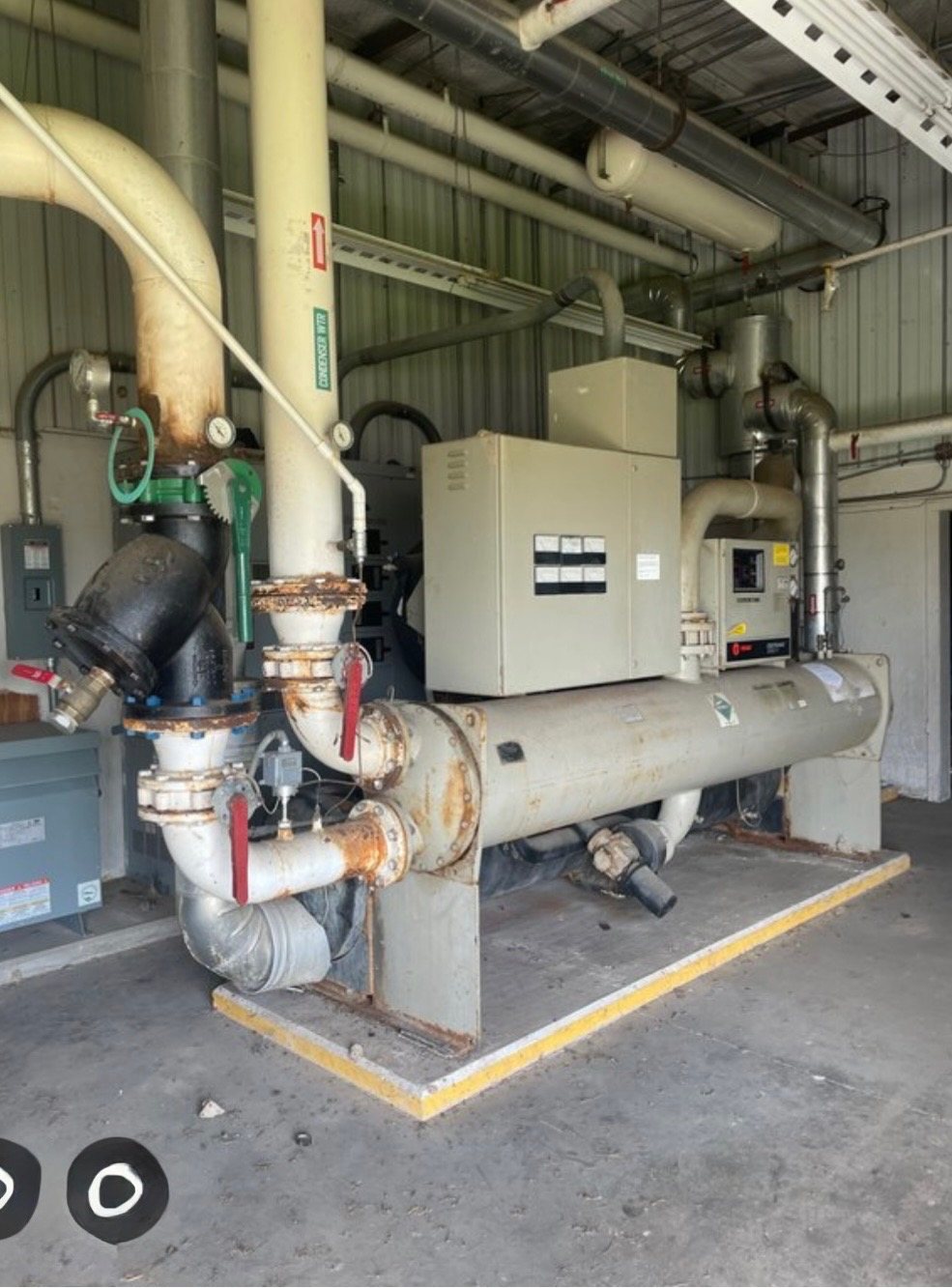
If you are considering a sale of air-cooled chillers in Gainesville, begin with the equipment you actually have and the conditions at the site. This guide addresses selling air-cooled chillers in Gainesville: clean-area protection, including the information a buyer needs, practical removal constraints and the decisions a facility should make before releasing an asset. The business buys equipment only; it does not sell chillers.
Identify the air-cooled chillers being offered
An air-cooled chiller rejects heat to outside air, generally through condenser coils and fans. Photograph the entire unit, compressor compartments where safely visible, coil surfaces and the rating plate. Describe whether it sits at grade or on a roof, and identify connected accessories such as a separate pump package only if they are included.
Report visible coil damage, missing fans or panels, known compressor problems and long periods of nonuse. Exposure and maintenance matter, but photographs alone do not prove the state of internal refrigerant circuits. There is no need to run fans or start compressors for an initial cash offer; share existing records instead of arranging a test.
Plan for clean-area protection
For a Gainesville facility with food, packaging or other cleanliness-sensitive operations, explain the site's actual separation and hygiene rules before planning the move. Note whether the path crosses production, storage or employee areas. An outdoor chiller and an indoor unit beside a controlled area may require very different protections and access windows.
Coordinate barriers, housekeeping, traffic routes and the timing of work with the facility's own safety and quality teams. Identify any process lines and controls that must remain untouched. The seller should not promise uninterrupted production solely on the basis of a purchase offer; that decision belongs to the operating facility.
What affects the cash offer?
Dimensions, lift points, roof access and distance to a truck are central to removing an air-cooled package. Tell the buyer about surrounding walls, screens, adjacent equipment and site restrictions. If a crane is needed, the proposed setup and available working window should be confirmed with the facility rather than inferred from an aerial image.
In addition to the equipment itself, clean-area protection can change the labor, equipment and time needed to complete a purchase. A useful comparison is the net amount to the seller together with the full written scope, not an attractive headline price with unexplained exclusions. There is no fixed price per ton in this guide: an offer follows a review of the individual machine and its circumstances.
Information to gather before requesting an offer
Start with clear photographs of the nameplate, the complete equipment and the surrounding access route. For air-cooled chillers, add the manufacturer's model and serial number, rated tons, refrigerant, electrical rating and approximate dimensions or shipping weight if documented. Describe the equipment's present location and whether it is installed, isolated or stored. Explain any known damage, missing parts or significant service work without guessing about conditions you cannot see.
A short inventory should also list separate starters, drives, pumps, controls or other accessories and state which ones are included. Send available drawings and service records if you have them, but do not delay an inquiry merely because paperwork is incomplete. Identify the authorized decision-maker, site contact and desired release date. Avoid opening panels, disturbing pressurized components or putting equipment into operation for photographs.
From offer to payment and removal
After reviewing the details, the buyer can discuss a cash offer and the proposed scope for the specific equipment. Payment is upfront, before removal, under the agreed written terms; confirm the amount and payment method before accepting. No chiller testing is required. The offer should identify the assets being purchased and any conditions or access assumptions, so the seller can decide whether the transaction meets the facility's needs.
The buying service handles refrigerant recovery, disconnects, rigging or crane work as needed, loading, freight and hauling within the agreed scope. The site should coordinate access, operating approvals and its own isolation procedures with the responsible personnel. Recovery and other work must be planned for the actual equipment and applicable requirements; refrigerant must not be vented. Keep retained systems and neighboring property clearly outside the purchase unless explicitly included.
Confirm the handoff in writing
Before scheduling collection, review the clean-area protection considerations alongside the lift route and equipment list. Confirm who authorizes entry, which connections are to be separated, where a truck can stage and what protection the site requires. If access, weight or the scope changes after the initial review, discuss the change before work proceeds. Preserve photographs, the accepted offer and the final equipment inventory in the facility's asset records.
Good preparation does not require a perfect maintenance file or a working machine. It means distinguishing documented facts from unknowns, disclosing constraints early and making sure the seller and buyer understand the same job. Ask for clarification whenever a price, payment timing, recovery step or responsibility for a retained component is unclear.
Questions to ask before you proceed
- Which serial-numbered machines and separate accessories are included in the offer?
- Is payment made upfront before removal, and what payment method will be used?
- Does the agreed scope include refrigerant recovery, disconnects, rigging, loading and hauling?
- What site access, operating approvals and isolation arrangements must the facility provide?
- How will shared equipment, occupied areas and the exit route be protected?
- What happens if the documented dimensions, access or equipment condition change?